Summary & Diagram
The Summary tab gives you a high-level read on the scanned codebase before you work through individual findings. AuditAgent generates two outputs in this tab, a textual code summary and a protocol diagram. See How It Works for the pipeline that produces them.
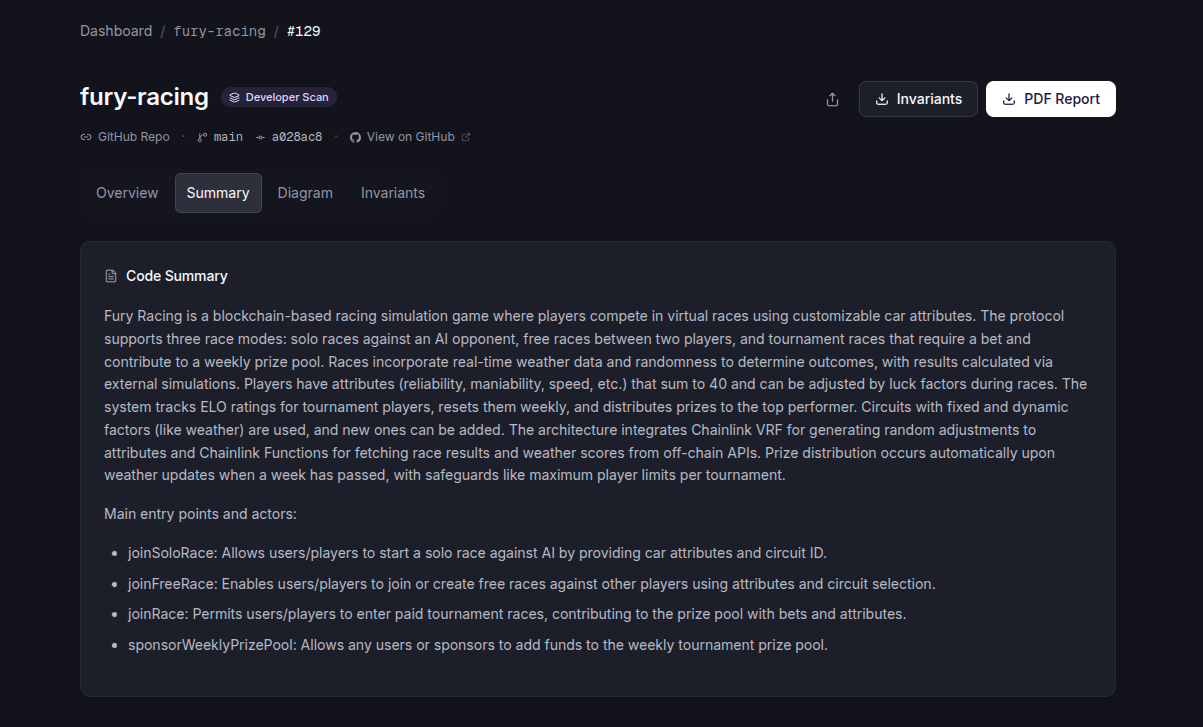
Code summary
The Code Summary is an AI-generated description of your protocol derived from the contracts you submitted. It covers four areas.
- Overall purpose. What the protocol aims to achieve, in plain language.
- Core architecture. The primary contracts and how they are structured.
- Main mechanisms. The fundamental operations and interactions within the protocol.
- Entry points and actors. Public or external functions that modify state (excluding read-only or owner-restricted ones), plus the inferred actors such as users, administrators, and other contracts that interact with them.
A good code summary often surfaces discrepancies between the intended logic and the actual code. Treat it as both a documentation aid and a sanity check.
The summary and diagram are useful starting points for creating or updating your project documentation.
Protocol diagram
The diagram shows how the components of your system interact with each other and with external actors.
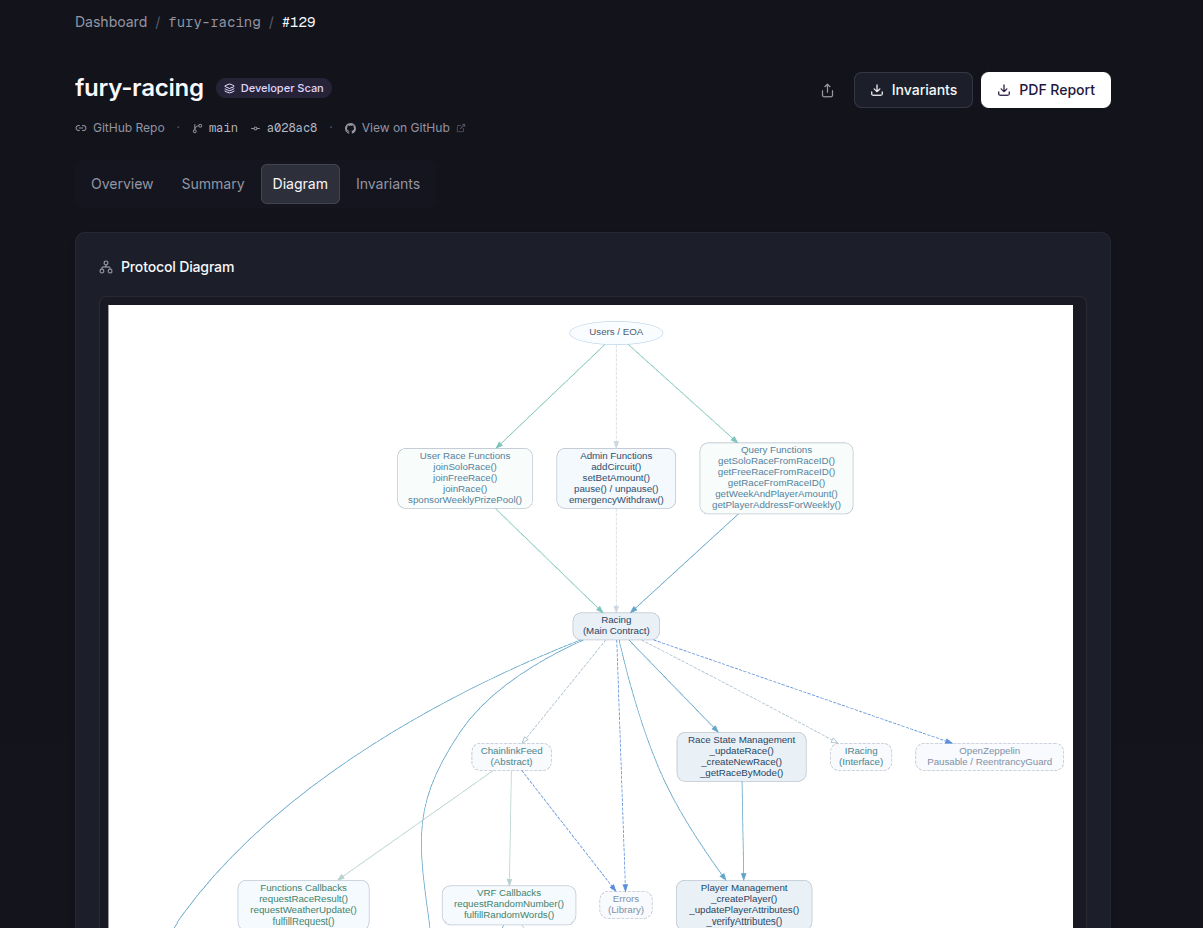
- Smart contracts. The main contracts within your system, shown as distinct nodes.
- Actors. External entities such as users, other contracts, and off-chain services that call the protocol.
- Interactions. Arrows and labels showing the flow of calls, data, or tokens between contracts and actors. This includes function calls, deployment relationships, and inheritance.
Together, the text summary and the visual diagram make it easier to spot complexity and risk before reading the detailed findings.